I studied history because I was fascinated by people, ideas and why societies do what they do. Then came a Master's in Journalism and Mass Communication because I knew I liked stories, communication and understanding audiences. Alongside university, I wrote, researched, worked with clients and learnt social media back when brands were still figuring out why they needed it. There wasn't a grand strategy yet. I was mostly collecting clues.

What had been experimentation became a profession.
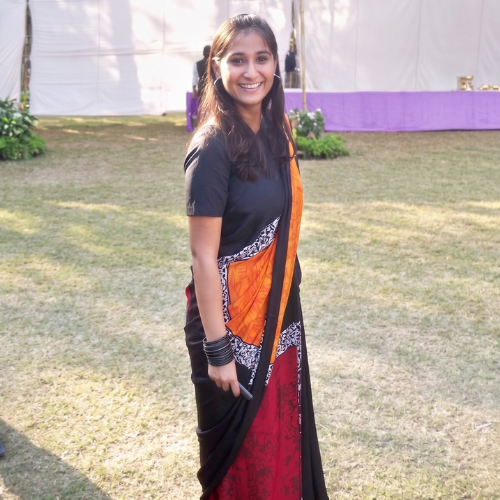
I moved through content, client servicing, social media and digital marketing before becoming a Business Head at a bespoke digital consultancy in Delhi, India. Suddenly, I wasn't simply producing the work. I was thinking about clients, teams, revenue, campaigns and how an agency actually grows.
The question changed from what should we communicate? to what is the business trying to achieve, and how does everything else support that? That question has followed me ever since.
Digital was changing quickly, and I wanted to understand it as more than a collection of platforms and tactics. I moved to the UK for a Master's in Future Media and Digital Marketing at Birmingham City University. I wanted to get deeper into how technology was changing communication, audiences and businesses, rather than simply getting better at running campaigns. I also worked alongside the degree as a PR and marketing assistant at the university, because apparently studying marketing wasn't enough. I needed to be doing it at the same time.
After Birmingham came Saskatoon, Canada, where I worked as a digital marketing strategist at 2 Web Design. Different country, different market, broader remit. I was working directly with clients on their brand and business objectives and then translating those objectives into something an internal team could actually execute. It reinforced something I was beginning to understand about myself: I liked being between the problem and the people solving it. The strategy-execution gap was becoming my favourite place to work.
Back in India, I co-founded SocioSketch, a digital consultancy.
Running a business has a wonderful way of making job descriptions irrelevant. I sold, pitched, hired, managed clients, developed strategies, built B2B relationships and led a team. For more than four years, I learnt what happens when strategy meets budgets, deadlines, people and commercial reality. And one lesson stuck: strategy is considerably easier when somebody else has to execute the PowerPoint.
After several years building SocioSketch, I wanted exposure to different organisations, markets and problems.
That took me through the Indian School of Business (ISB), a globally recognised business school, and then Uplevyl, a US-based business, working across marketing, operations, workflows and cross-functional delivery.
By then, the pattern was obvious. I'd started in communications but kept drifting towards the decisions behind it: proposition, process, growth, operations and strategy.
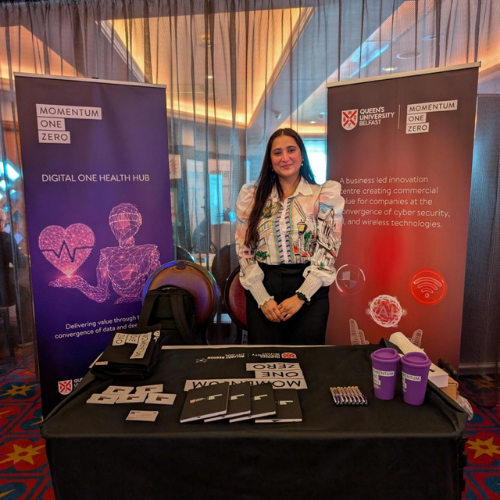
I joined Queen’s University Belfast’s CSIT, working where cybersecurity, industry, government and academia intersected. The technology was complex. Very complex. My role evolved from making it understandable to connecting that expertise with industry through propositions, partnerships and launches. Then came Momentum One Zero, a £70m innovation centre focused on data, AI and emerging technologies. I helped shape its story across programmes, partnerships and stakeholders. That was the shift: from communicating complex ideas to thinking more about how they could create practical value.
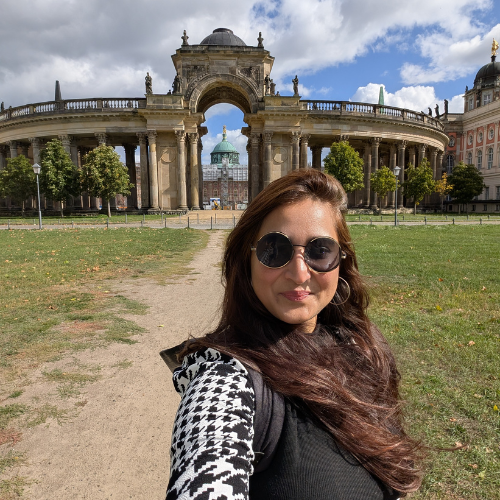
Because apparently standing still was never really the plan. After years of learning by doing, building and figuring things out along the way, I decided to add some formal structure to that experience. I moved to Germany to pursue an MBA in General Management at the University of Potsdam. .It feels less like a career change and more like a natural next step: from communications to business, growth, technology and innovation, and increasingly towards strategy, management and organisational decision-making. And Berlin feels like the right place for it: international, entrepreneurial, technology-driven and just chaotic enough to feel familiar.
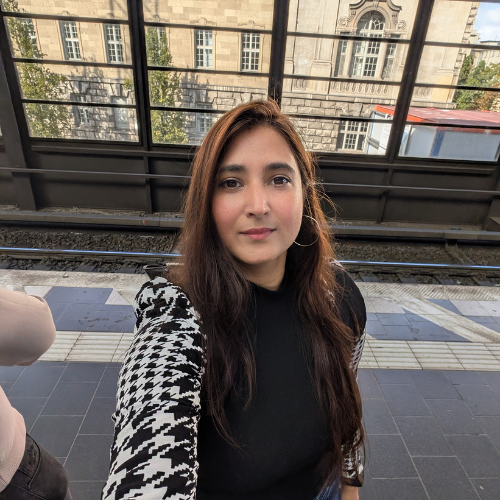
On paper, this career can look like several different careers. History. Journalism. Communications. Digital. Entrepreneurship. Strategy. Technology. Innovation. And now, an MBA. For a while, I thought that meant I had changed direction a lot. I don't anymore. The subject changed. The underlying job didn't. I've repeatedly found myself in the messy space between an idea and a decision: understanding what we're trying to achieve, making complicated things clearer, bringing different people around the same problem and figuring out how an ambitious idea becomes something commercially and practically useful.
Turns out I wasn't changing lanes quite as often as I thought. I was just getting closer to the work I wanted to do.
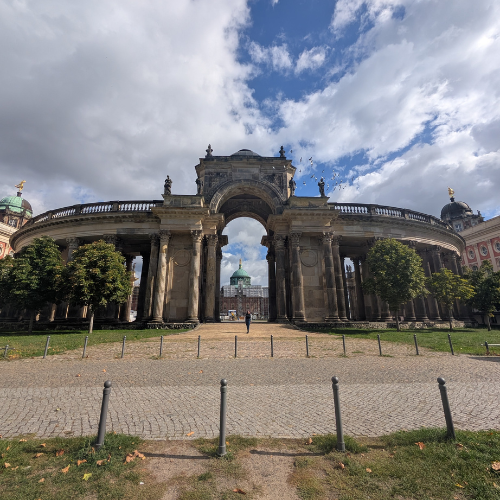
I want to move further into business strategy, innovation and transformation, particularly where technology, commercial opportunity and organisational change intersect.The MBA is part of that transition. So is moving to Germany. And so is taking everything I've learnt from communications, entrepreneurship, technology and working across different markets and applying it to bigger, messier business problems. I know the direction. I'm just leaving enough room for the plot twists.